








Tank Container Insights: Specialized Liquid Logistics

The Essential Guide to Tank Containers: Key Considerations for Your Business
Tank containers are essential for the transport of bulk liquids and gases, offering unmatched efficiency, safety, and versatility. However, it is crucial to recognize that not every tank container is suitable for every product. Selecting the incorrect specifications can not only compromise safety but also lead to significant product loss and unforeseen costs.
In this article, we examine why making the right choice is so critical and provide a comprehensive overview of the various types of tank containers. This ensures you know exactly which technical requirements to prioritize for your specific logistics needs.
The Critical Match: Product and Tank Container
Before acquiring a tank container, it is vital to understand that these units are engineered for specific types of cargo. The chemical composition of the product you intend to transport is the primary determining factor for the required specifications.
-
Corrosive Substances: Acids and bases can severely degrade steel. These substances require tank containers equipped with specialized internal linings or constructed from high-grade stainless steel.
-
Food-Grade Products: Containers for foodstuffs, such as milk, juices, or oils, must adhere to stringent hygiene standards. They are typically manufactured from food-grade stainless steel with specialized finishes to prevent contamination.
-
Pressurized Gases: Liquefied gases, such as propane or liquid nitrogen, require containers designed to withstand extreme pressure, often featuring specialized insulation to maintain stable temperatures.
Ultimately, it is not merely a matter of volume, but a fundamental requirement for safety and product integrity. Utilizing an unsuitable container can lead to hazardous leaks, product contamination, or even catastrophic failure.
Which Types of Tank Containers are Available?
To assist you in making the optimal choice, here is an overview of the most common tank container types and their specific applications.
1. T11 ISO Tank Container
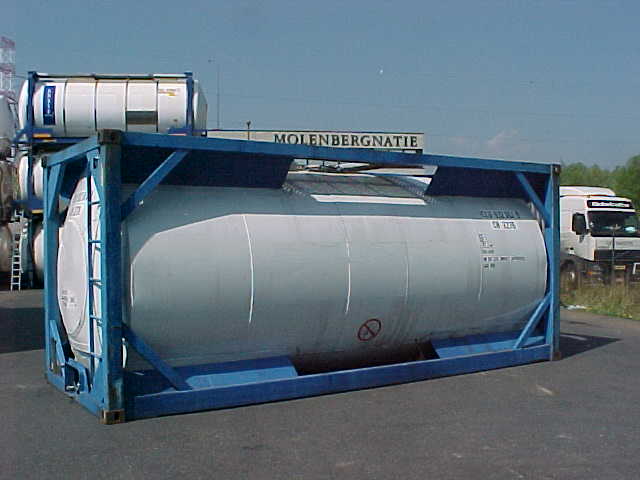
This is the most versatile and widely used tank container. It is suitable for a broad spectrum of both hazardous and non-hazardous liquids, including:
-
Chemicals
-
Food-grade products (when specified)
-
Oils and fuels These units are exceptionally robust and comply with international ISO standards, ensuring seamless multimodal transport via road, rail, and sea.
2. Food-Grade Tank Container
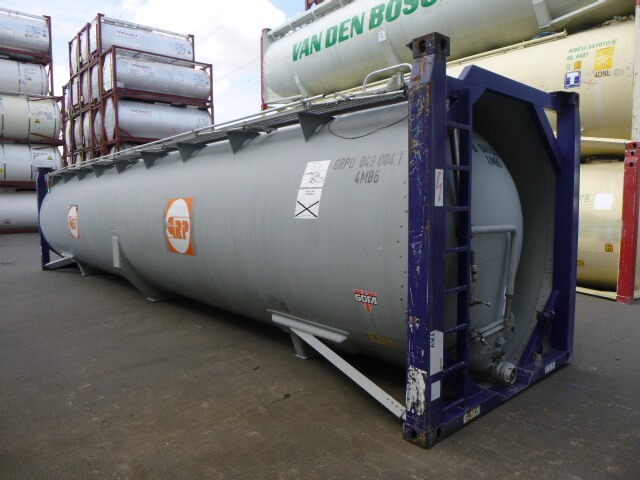
Specifically engineered for the transport of liquid foodstuffs, these containers are identifiable by their dedicated markings. They are used exclusively for food products to eliminate any risk of cross-contamination with chemicals, ensuring total product purity.
3. Gas Tank Containers (LPG/LNG)
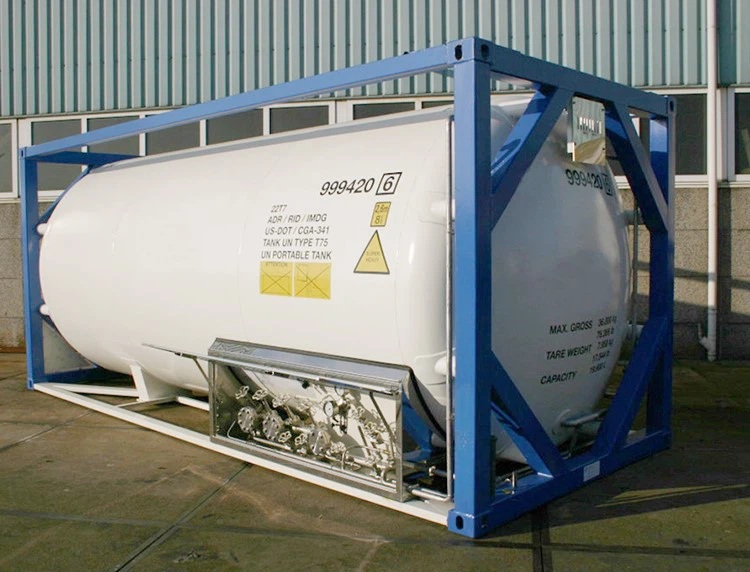
Designed for the transport of liquefied gases under high pressure, these containers feature reinforced thick-walled shells. They are equipped with specialized pressure relief valves to regulate internal pressure. These units are commonly utilized for products such as LPG, propane, and butane.
4. Reefer Tank Container
Similar to a standard reefer container, a reefer tank container is equipped with an integrated cooling or heating system. This functionality is essential for the transport of temperature-sensitive liquids, such as juices, specific chemicals, or liquid chocolate, where maintaining a precise thermal range is critical.
5. Bitumen Tank Container
These units are specifically engineered for the transport of bitumen and other highly viscous liquids that must be maintained at elevated temperatures to remain fluid. They are equipped with specialized heating systems, typically utilizing steam or electric heating elements, combined with high-performance insulation.
Making the Right Choice
Selecting the optimal tank container requires technical expertise. We recommend considering the following critical factors:
-
Product Specifications: Determine the chemical properties, required temperature range, and pressure requirements of your cargo.
-
Regulatory Compliance: Ensure full adherence to national and international regulations for hazardous materials, such as ADR, IMDG, and RID.
-
Dimensions and Capacity: Evaluate the required volume and weight constraints based on your specific transport routes.
By collaborating with a specialized partner like Wilbert Trading, you ensure that your container meets all operational logistics requirements while maintaining the highest safety and industry standards.
Contact Us
Would you like to learn more about tank container solutions or are you looking for a specific model? Please feel free to contact us to discuss the possibilities for your project.